



UC Davis Health strengthens blue wrap recycling program with focus on transparency
UC Davis Health has made a change to the way it collects and recycles used blue wrap from its operating rooms. The switch is meant to make the recycling process easier to track, easier to verify and better aligned with the organization’s sustainability goals.
Blue wrap is the blue plastic material used to keep surgical instruments sterile before they are used. Because it is used every day in operating rooms, it can add up quickly. Finding a responsible way to recycle it is one way UC Davis Health can reduce waste from daily hospital operations.
"The change was not about cost. It was about knowing what happens after the material leaves UC Davis Health," said Kristina Bair, sustainability director. "We wanted clear answers about where the blue wrap goes, how it is processed and what it becomes after it is collected.
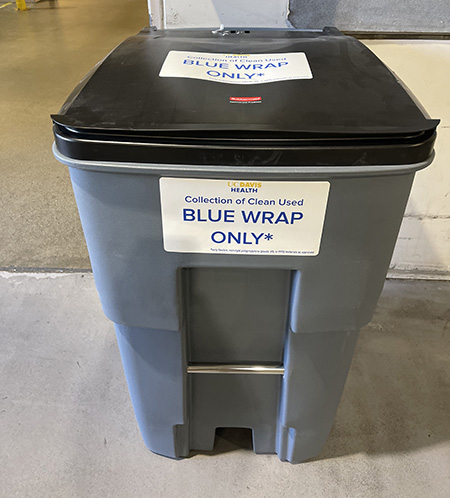
Bair said that matters because not all recycling works the same way. She explained that some plastic recycling methods break plastic down using very high heat in a process called chemical recycling. One common version of that process is called pyrolysis. In simple terms, plastic is heated until it turns into oils and gases.
The concern is that this process does not always turn plastic back into new plastic. In many cases, only a small amount becomes material that can be used again. The rest may become fuel that is later burned. The process can also use a lot of energy and create waste and emissions.
Another challenge is tracking, Bair said. When recycled material is mixed with new fossil-based material, it can be hard to prove that a specific hospital’s plastic waste was truly made into something new. UC Davis Health wanted a recycling partner that could provide clearer, more direct information.
The new program uses mechanical recycling. That means the collected blue wrap is sorted, cleaned, shredded and turned into new resin. That resin is then used to make new lab and hospital supplies. The material is not converted into fuel along the way.
UC Davis Health also now has access to a real-time dashboard that tracks how much material is being diverted from landfills and incinerators. That data helps the sustainability team measure progress and support waste reduction goals with numbers that can be verified.
“For the team, the bottom line is simple: environmental commitments are stronger when they can be measured,” Bair said. “By choosing a process with more transparency, UC Davis Health is holding its recycling partnerships to a higher standard and taking another step toward reducing the environmental impact of health care waste.”